Professional Transmission Service & Repair in Las Vegas
Transmission Service in Las Vegas for vehicles showing delayed shifts or slipping gears
Specialized Auto Maintenance performs transmission service for drivers in Las Vegas whose vehicles exhibit shifting delays, gear slippage, or fluid leaks beneath the vehicle. The transmission converts engine power into controlled wheel movement through a complex system of hydraulic fluid, clutch packs, valve bodies, and planetary gear sets. When transmission fluid degrades from heat exposure or internal wear creates metal particles in the fluid, hydraulic pressure drops and shift quality deteriorates, producing noticeable hesitation when accelerating from a stop or rough transitions between gears.
Routine transmission maintenance includes draining old fluid, replacing the filter if accessible, and refilling with manufacturer-specified fluid that restores hydraulic pressure and lubrication. Warning signs that service is overdue include a burnt odor from the fluid, dark reddish-brown coloration instead of bright red, slipping during acceleration where engine speed increases without corresponding vehicle movement, and delayed engagement when shifting from park into drive. High ambient temperatures in Las Vegas accelerate fluid breakdown, reducing the typical service interval compared to vehicles operated in moderate climates.
If you notice hesitation during shifts or see fluid spots on your driveway, schedule a transmission inspection to assess fluid condition and identify potential issues before internal damage occurs.
How Fluid Changes Preserve Hydraulic Function
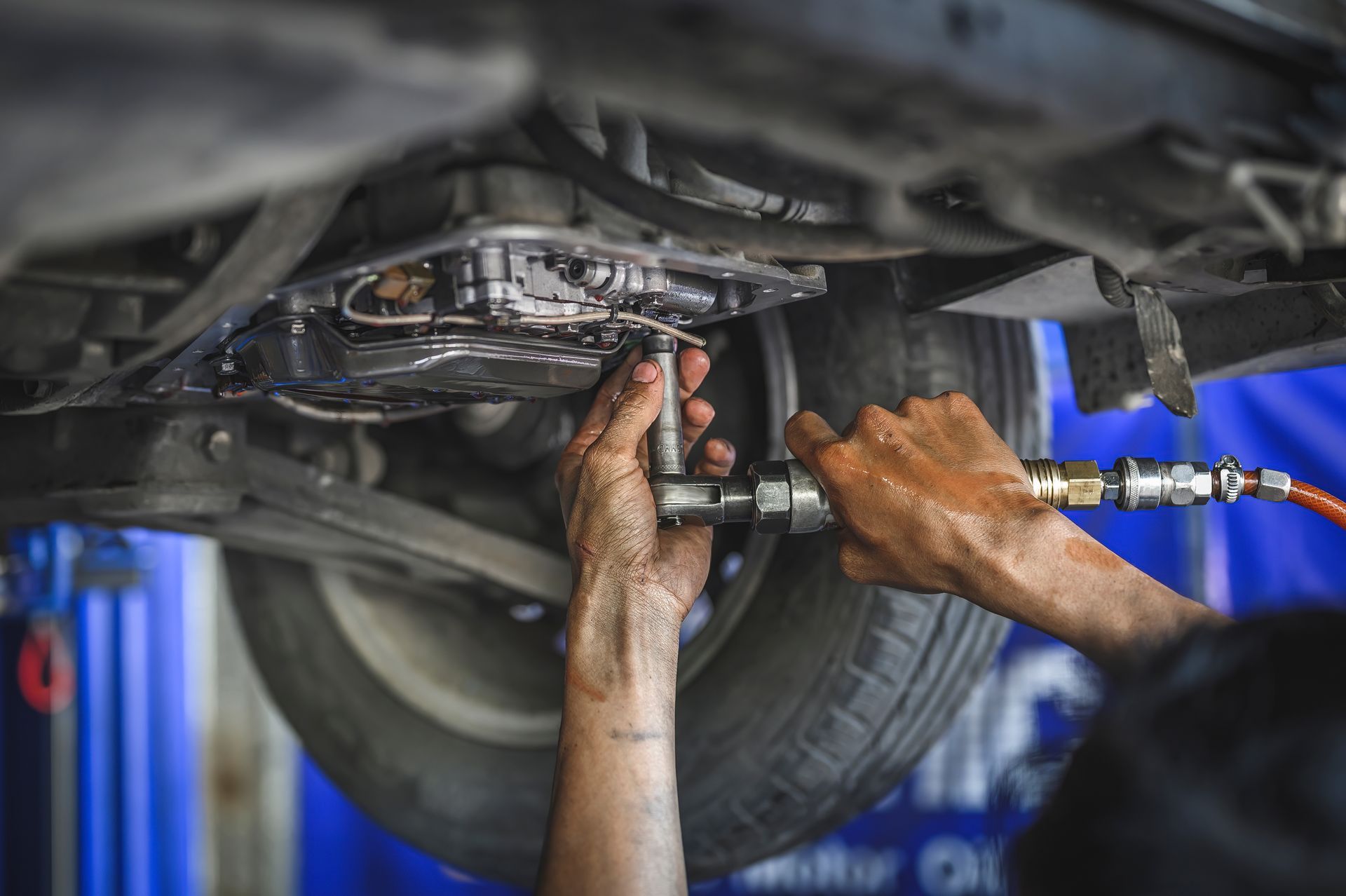
When your transmission receives service, old fluid is evacuated through the drain plug or pan removal, depending on your vehicle's design. The pan is inspected for metal shavings or debris that indicate internal wear, and the filter element is replaced to maintain clean fluid flow through valve body passages. Fresh transmission fluid is added to the correct capacity using the specific formulation required by your vehicle's manufacturer, whether conventional automatic transmission fluid or synthetic fluid for newer models with more precise hydraulic tolerances.
After service, you will notice smoother shifts, particularly when the transmission is cold, and firmer engagement without the lag or flare that occurs when worn fluid cannot maintain proper clutch pack pressure. Specialized Auto Maintenance documents the fluid condition before service and provides mileage recommendations for the next interval based on your driving patterns and the fluid's appearance during inspection.
Transmission diagnostics using scan tools can retrieve fault codes and monitor shift timing if electronic controls are malfunctioning, but fluid service itself addresses only hydraulic and lubrication needs. The service does not repair hard parts like torque converters, solenoids, or clutch packs that may require transmission rebuild or replacement if internal damage has already occurred. Regular fluid changes performed before symptoms appear remain the most effective prevention against major transmission failure.
Common Questions About Transmission Maintenance
Understanding when transmission service becomes necessary and what it addresses helps you avoid misunderstandings about what fluid changes can and cannot fix.
How often should transmission fluid be changed?
Most manufacturers recommend fluid changes every thirty thousand to sixty thousand miles, though severe driving conditions such as towing or extended idling in Las Vegas heat may warrant shorter intervals.
What causes transmission fluid to turn dark?
Heat and friction break down fluid additives over time, creating oxidation byproducts that darken the fluid and reduce its ability to transfer hydraulic pressure efficiently through valve body circuits.
Why does the transmission slip after fluid is changed?
If severely degraded fluid is replaced in a high-mileage transmission, the restored hydraulic pressure may reveal worn clutch packs that were previously slipping unnoticed due to low fluid pressure.
Can a fluid change fix hard shifting?
Fresh fluid often improves shift quality if the problem stems from low hydraulic pressure or contaminated fluid, but mechanical issues like worn bands or failed solenoids require component replacement beyond fluid service.
What is a transmission flush versus a fluid change?
A flush uses machine pressure to evacuate more old fluid from the torque converter and cooler lines, while a standard drain-and-fill replaces only the fluid in the pan and may leave up to half the old fluid in the system.
Bring your vehicle to Specialized Auto Maintenance if you notice any change in shift behavior, and a technician will inspect fluid level and condition to determine whether service or further diagnostics are required to address the symptoms you are experiencing.